


The Haagse Jazz Club – more than 80 years of jazz history in The Hague
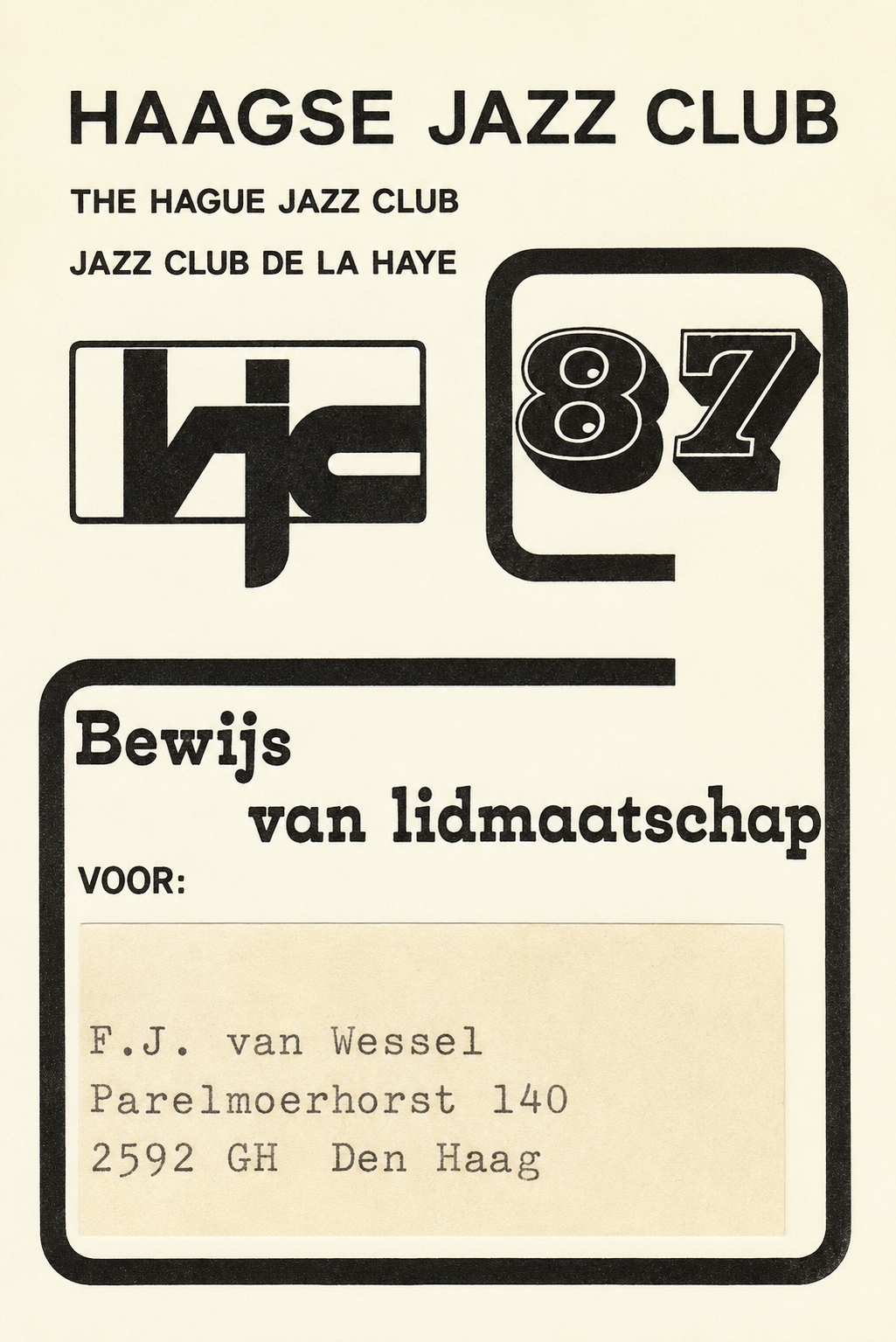
The Haagse Jazz Club is one of the oldest still-existing jazz associations in the Netherlands and traces its origins to the Dutch Swing College Club, founded in 1946. As such, the club has been contributing to The Hague’s rich jazz history for eight decades. Moreover, the Hague Jazz Club serves as the city’s only permanent venue for old-style jazz. Over the years, many well-known musicians have performed at the club, and the HJC has counted numerous famous jazz greats among its honorary members, including Louis Armstrong, Duke Ellington, Sydney Bechet, Paul Acket, Peter Schilperoort, Rita Reys, and Rob Agerbeek.
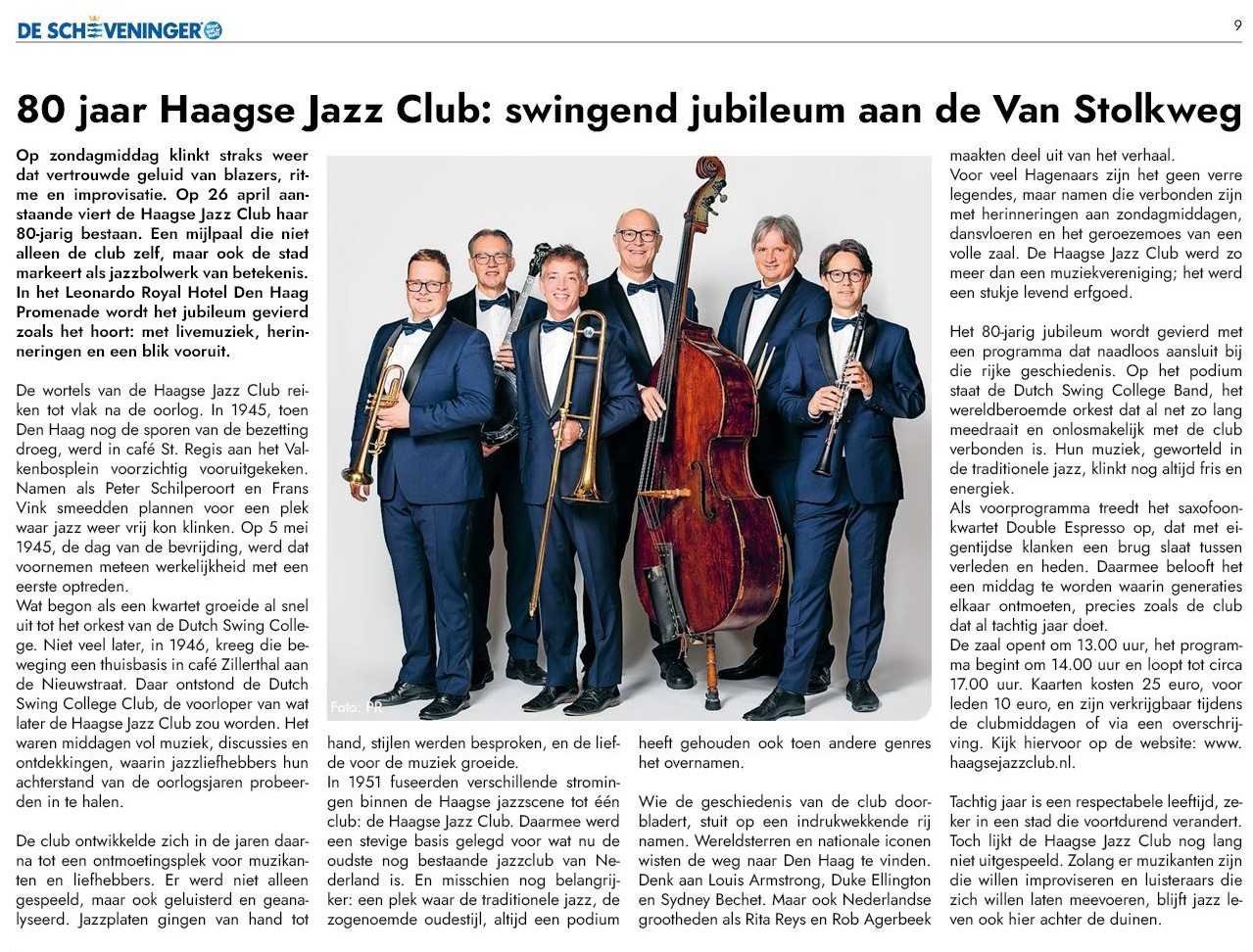
The history of the club begins immediately after the Second World War. Even during the war years, plans emerged for the founding of the Dutch Swing College, an initiative by Peter Schilperoort, Frans Vink, and Joost van Os, among others. The idea was ambitious: in addition to an orchestra, they also wanted to establish a music school and a recording studio. On May 5, 1945, the day of the liberation, the first performance by the Dutch Swing College Quartet took place at Café St. Regis in The Hague. This laid an important foundation for organized jazz activities in the city.
The quartet soon grew into “The Orchestra of the Dutch Swing College” and received a contract in 1945 at the Canada Club in Apeldoorn, where Canadian soldiers were staying. After returning to The Hague, the Dutch Swing College Club was started in Café Zillerthal in early 1946. The orchestra played there regularly, and jam sessions with other musicians took place. This moment is seen as the beginning of association jazz activities in The Hague, from which the Haagse Jazz Club later emerged.
Immediately after the war, jazz meant more than just music to many people. It symbolized freedom, fellowship, and optimism during a period of reconstruction. In those years, the Hague Jazz Club grew into a place where music lovers gathered to discover jazz, listen to live performances, and dance together.
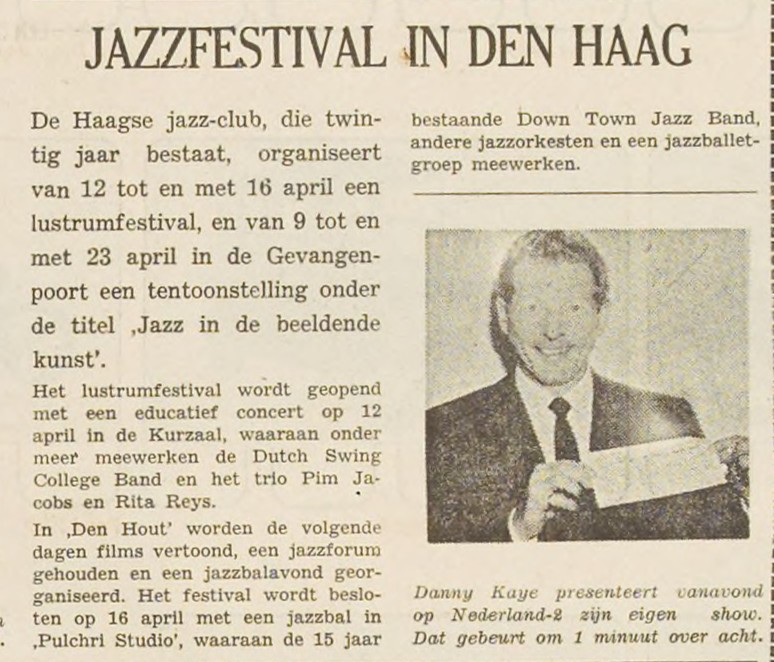
In 1948, disagreements arose between enthusiasts of traditional jazz and newer jazz styles. As a result, the Dutch Jazz Club was founded alongside the existing club. The differences diminished over the years, and in 1951, both associations merged under the name “Haagse Jazz Club”.
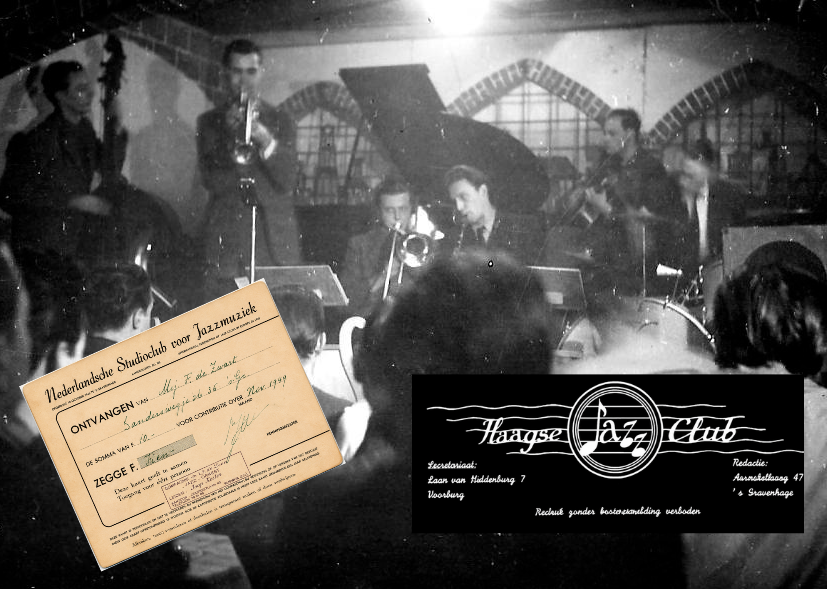
In its early years, the club focused not only on live performances but also on lectures and the collective listening to and analysis of jazz records. This educational aspect was important immediately after the war, as many young jazz enthusiasts had had little access to jazz music during the war. Gradually, however, the emphasis shifted to organizing high-quality live jazz music for both listeners and dance lovers.
Since 1946, the Haagse Jazz Club has been based at many locations in The Hague. Nowadays, the Sunday afternoons take place at the Leonardo Royal Hotel Den Haag Promenade. Here, the club still brings together jazz lovers, musicians, and dancers in an atmospheric setting where live music, socializing, and conviviality take center stage.
In 2026 …
… the Haagse Jazz Club celebrated its 80th anniversary. Eight decades full of music, friendships, dancing, and unforgettable concerts make the club a living part of The Hague’s music history — sustained by generations of volunteers, members, visitors, and musicians who continue to share a love for jazz. Over the years, musical styles and generations have changed, but the Haagse Jazz Club has always remained true to its core purpose: bringing people together around live jazz music in a warm and accessible atmosphere.


Jazz music has held a special place in The Hague’s cultural life since the 1940s. Influenced by American swing, Dixieland, and traditional jazz, a flourishing jazz scene emerged after the war in which live music, dance, and social interaction took center stage. Thanks to the presence of international influences, dance venues, and active music associations, The Hague grew into one of the most important jazz cities in the Netherlands. The Haagse Jazz Club occupied a special position within this as a meeting place for lovers of traditional jazz and live swing music.
The Hague…
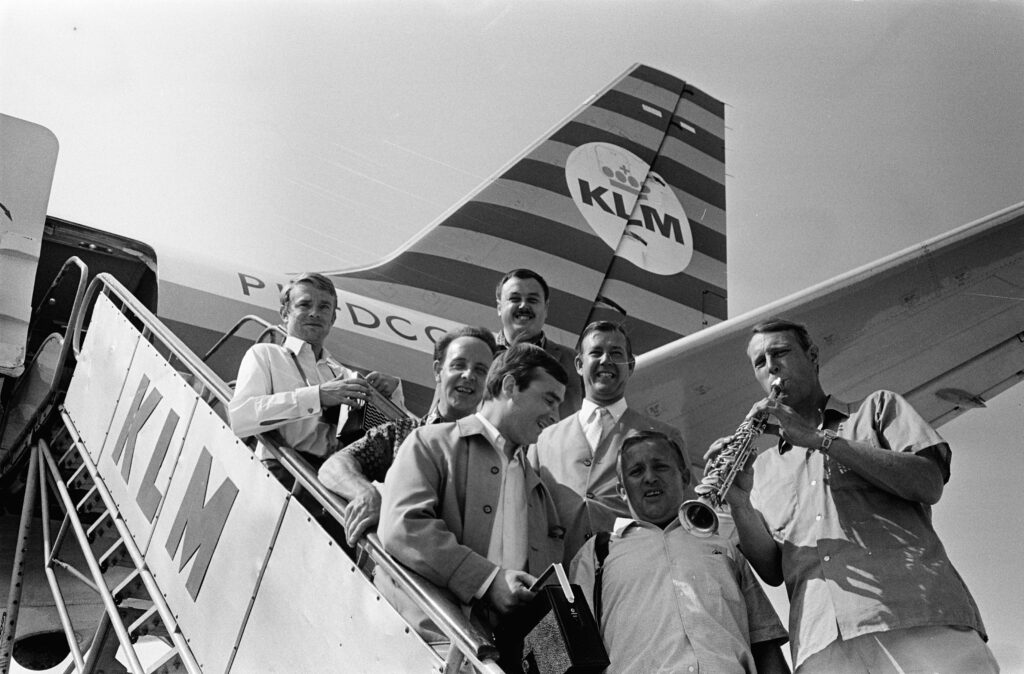
… has held a special place within the Dutch jazz world since the mid-twentieth century. After the Second World War, interest in jazz music grew strongly, partly influenced by American swing, big bands, and traditional jazz styles that reached Europe via radio, records, and international musicians. A vibrant jazz culture emerged in cafés, dance halls, and cultural meeting places, in which live music, improvisation, and dance took center stage. During that period, jazz was seen not only as entertainment but also as a symbol of freedom, creativity, and international connectedness in a time of reconstruction.
Over the years, the Netherlands developed into an important jazz nation within Europe. Dutch musicians gained international fame, and jazz clubs, festivals, and venues emerged throughout the country, providing a platform for both traditional and modern jazz styles. The Hague also played a significant role in this development. The city boasted a rich cultural life with numerous music cafés, dance venues, and concert locations where jazz enthusiasts met. Thanks to its international character, partly due to the presence of embassies, international organizations, and foreign visitors, The Hague remained strongly connected to international musical influences.
Jazz music in the Netherlands continued to evolve. Alongside traditional styles such as New Orleans jazz, swing, and dixieland, there was also room for bebop, mainstream jazz, Latin jazz, and modern crossover forms. At the same time, the appreciation for live jazz music and improvisation remained undiminished. Festivals and concert series attracted visitors from home and abroad and reinforced the international reputation of the Netherlands as a jazz nation.
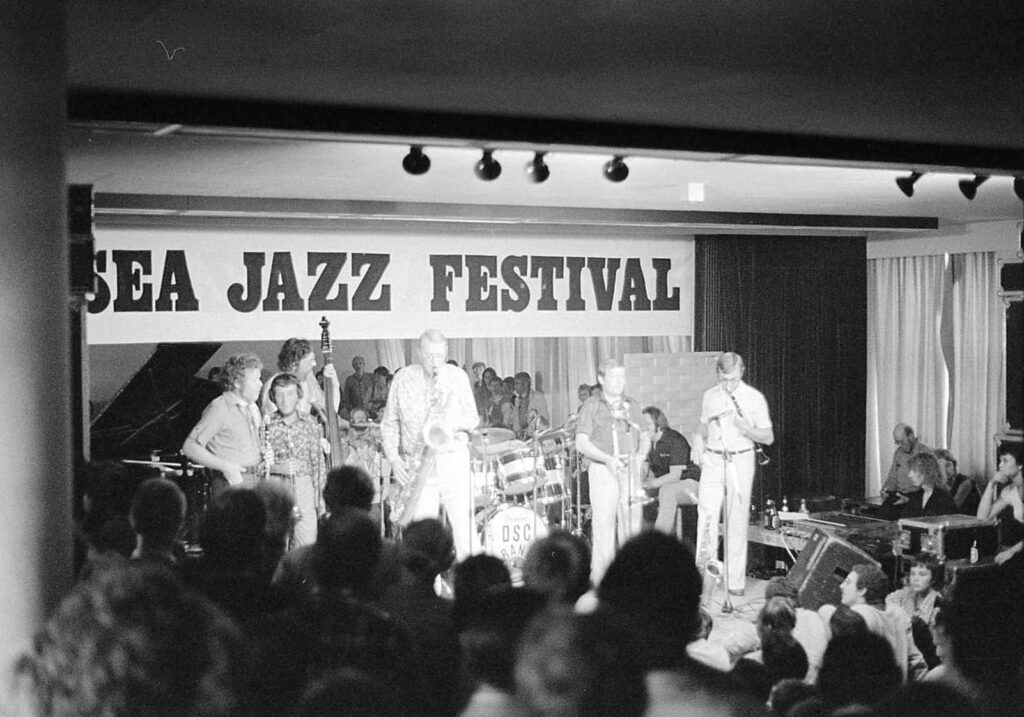
The famous North Sea Jazz Festival plays an important role in this, having grown since 1976 into one of the largest and best-known jazz festivals in the world. The festival originally started in The Hague and brought together international jazz legends with new generations of musicians. Although the festival now takes place in Rotterdam, the historical link with The Hague remains an important part of Dutch jazz history. To this day, jazz forms a vibrant part of the cultural life in the region, supported by concerts, festivals, music schools, clubs, and a loyal audience of enthusiasts.