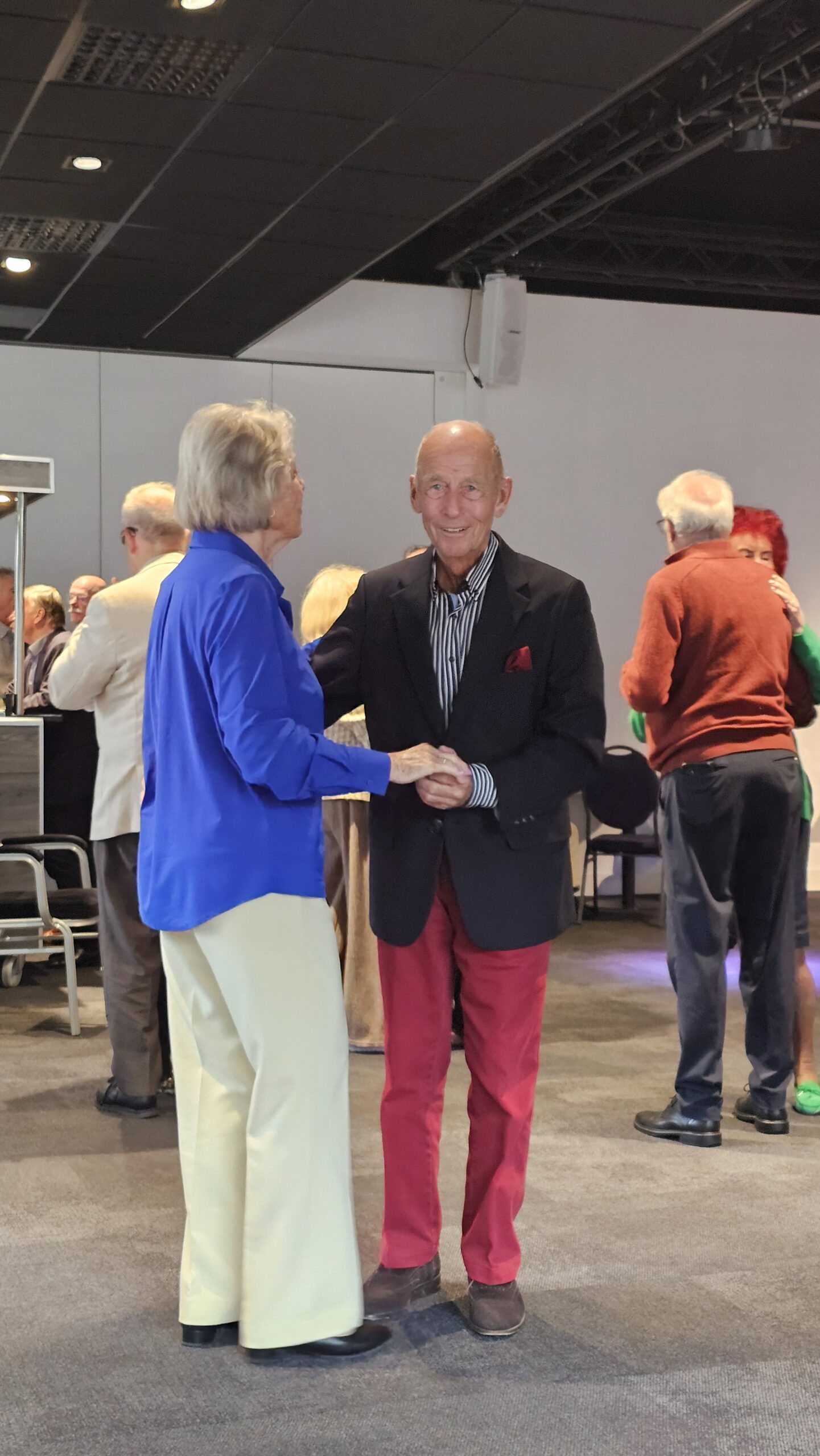
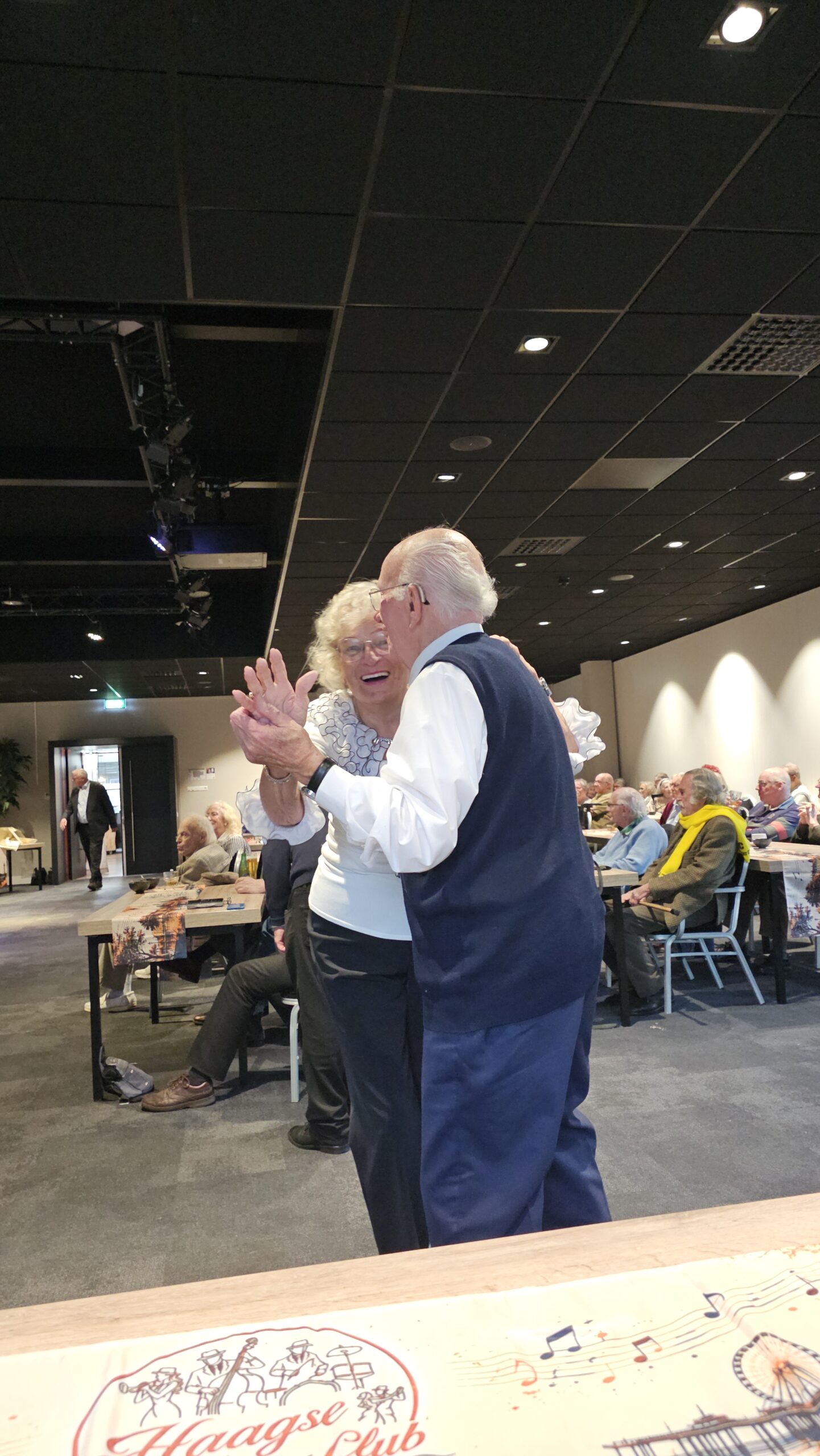
Music & Dance

Music and dance are much more than just relaxation or entertainment. They touch something fundamental within people. For centuries, people have come together to make music, listen to music, and dance. This happens in virtually every culture in the world. It is a natural way to connect, express emotions, and enjoy oneself together. Jazz, in particular, with its lively rhythms, improvisation, and spontaneous character, invites you to move along, feel along, and enjoy yourselves together.

When we listen to music, much more happens than we often realize. Our brains simultaneously process rhythm, melody, harmony, and dynamics. Music can evoke memories, intensify emotions, or conversely, calm. A swinging jazz band can provide energy, while a quiet ballad brings relaxation.

Music engages different parts of the brain simultaneously. As a result, not only our hearing remains active, but also our memory, concentration, and emotional center. A familiar song can transport us back to a special event or a cherished moment in a fraction of a second.

What happens in our body?
Scientific research shows that music and dance also have physiological effects. While listening to music we like, our body produces dopamine, among other things. This is a neurotransmitter involved in motivation, pleasure, and the experience of reward..

Research suggests that music can contribute to the reduction of stress and stress-related biomarkers, including cortisol, in certain situations. As a result, many people feel calmer and more relaxed after listening to music or dancing for an afternoon.
Our nervous system also reacts to music. The rhythm can influence our breathing, heart rate, and muscle tension. That is why we often feel an instinctive urge to tap our feet, clap along, or even hit the dance floor. Our body reacts spontaneously to the music, as it were.

Dance: movement for body and mind
Dance literally sets music in motion. While dancing, we use muscles, joints, and our balance. We work on fitness, coordination, and flexibility without it feeling like exercising. Precisely because dance is fun, many people forget how much they actually move.
But dance is also a workout for the brain. We listen to the rhythm, recognize patterns, remember steps, and respond to our partner. As a result, various brain regions remain actively working together. It is a beautiful combination of physical activity and mental challenge.
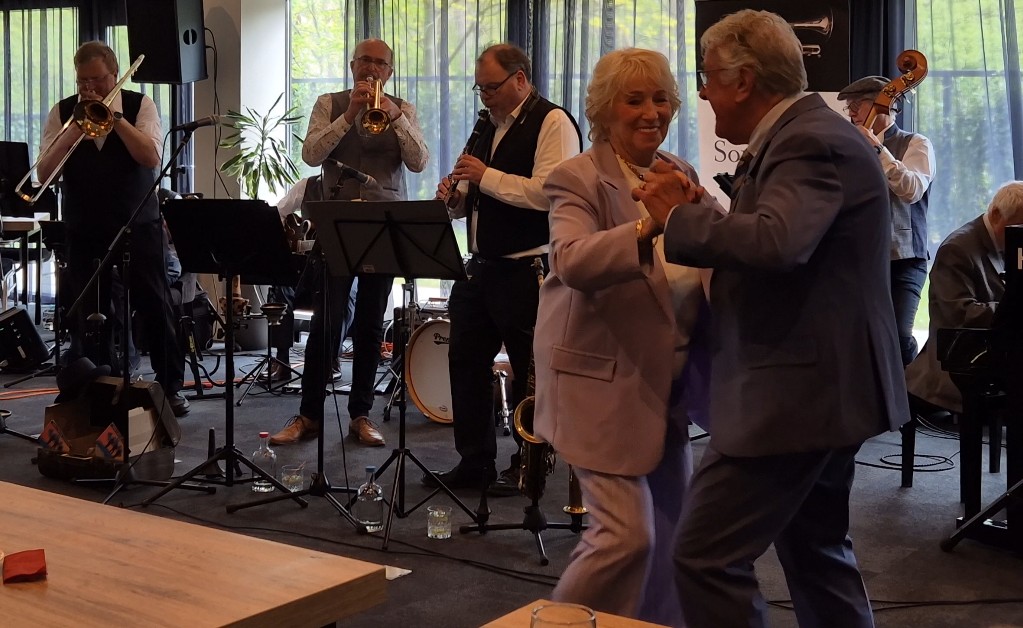
The social aspect: experiencing it together
Perhaps the most beautiful thing about jazz and dance is the connection that is created between people. In a time when many contacts take place digitally, a jazz afternoon offers something that is becoming increasingly valuable: genuine human contact.
On the dance floor, people meet each other in a natural and accessible way. Age, background, or profession often play hardly any role. They share a passion for music and enjoy the same moment together. A smile, an invitation to dance, or a short conversation during the break can be enough to make new connections.

For many people, a jazz club or dance association forms an important social environment. Friendships are formed, people look forward to the next gathering, and feel part of a community. That sense of belonging contributes significantly to our well-being and quality of life.

Research shows that social contacts play an important role in both physical and mental health. People who regularly meet others often experience fewer feelings of loneliness, more joy in life, and a greater sense of purpose. Jazz and dance create exactly those encounters in a relaxed and enjoyable way.

Why jazz in particular is so special
Jazz occupies a unique place within the music world. While much music revolves around fixed structures and predictability, jazz thrives on spontaneity, creativity, and improvisation. No performance is ever exactly the same. Musicians constantly listen to one another, react to one another, and create something new together in the moment. It is precisely this lively interaction that makes jazz so captivating for both musicians and listeners.

The characteristic “blue notes,” the subtle tension between anticipation and surprise, give jazz a special emotional depth. A jazz melody can sound simultaneously melancholic and hopeful, relaxed and exciting, familiar and surprising. As a result, jazz appeals not only to the intellect but also to the emotions.

For our brains, jazz is a rich experience. The unexpected nature of improvisation holds attention and stimulates curiosity. The brain remains actively predicting what will happen, while the musicians regularly deviate from those expectations. This interplay between tension and relaxation makes jazz intellectually challenging and emotionally satisfying.
Jazz also has a special physical effect. The swinging rhythm invites movement, even if it is just by tapping a foot, nodding your head, or taking to the dance floor. Many people find that jazz provides both relaxation and energy: the body moves while the mind calms down.

Perhaps therein lies the greatest strength of jazz. Jazz invites us to be present in the moment. Not everything has to be perfect or planned. There is room for spontaneity, for encounters, and for enjoying the unexpected. It is precisely because of this that many people experience jazz as liberating, inspiring, and full of zest for life.

Jazz not only keeps the body moving, but also the mind curious and the heart open.

A moment to recharge
An afternoon of live jazz and dance offers more than just music. It is a moment to let go of the daily hustle and bustle. Work, obligations, and worries fade into the background for a few hours. Instead, the focus is on music, movement, meeting new people, and fun.
Some people feel relaxed and calm afterwards. Others, on the other hand, go home full of energy. But almost everyone takes something positive with them: a beautiful memory, a pleasant conversation, a nice dance, or simply the feeling of having been part of something special.

Music and dance keep you healthy
Jazz and dance bring movement, music, and social connection together in one unique experience. They stimulate body and mind, reduce stress, foster social contact, and contribute to a sense of happiness and well-being.
Whether you are actively dancing, listening attentively to a swinging jazz band, or enjoying the convivial atmosphere: jazz and dance have the special power to bring people closer together and make life just a little bit more beautiful.

Jazz and dance keep you healthy – not only the body, but also the heart and the mind.

Sources and further information
Salimpoor, V.N., Benovoy, M., Larcher, K., Dagher, A. & Zatorre, R.J. (2011). Anatomically distinct dopamine release during anticipation and experience of peak emotion to music. Nature Neuroscience, 14, 257–262. Research into the role of dopamine and the reward system during intense music experience.
Koelsch, S. (2011). Toward a neural basis of music perception – a review and updated model. Frontiers in Psychology, 2, 110. On how music activates different brain areas simultaneously, including areas involved in emotion, memory, and motor skills.
Finn, S. & Fancourt, D. (2021). Biomarkers of Stress in Music Interventions: A Systematic Review. Journal of Music Therapy. A systematic review of the influence of music on stress and stress-related biomarkers, including cortisol.
Meng, X. et al. (2020). Effects of dance on cognitive function in older adults: a systematic review and meta-analysis. Age and Ageing. Research into the effects of dance on cognitive functions in older adults.
Zhang, H. et al. (2025). Effects of dance interventions on cognitive function, balance, mobility, and life quality in older adults: A systematic review and Bayesian network meta-analysis. Archives of Gerontology and Geriatrics. An extensive analysis of the influence of various dance forms on cognition, balance, mobility, and quality of life.
Holt-Lunstad, J., Smith, T.B. & Layton, J.B. (2010). Social Relationships and Mortality Risk: A Meta-analytic Review. PLOS Medicine, 7(7), e1000316. A large meta-analysis of the importance of social relationships for health and life expectancy.
Limb, C.J. & Braun, A.R. (2008). Neural Substrates of Spontaneous Musical Performance: An fMRI Study of Jazz Improvisation. PLOS ONE, 3(2), e1679. Research into brain activity during spontaneous jazz improvisation in professional jazz musicians.